Wind and solar leases are 30-40 year commitments. The developer’s standard lease is written to protect the developer — not you. Get independent legal counsel before you sign.
When a wind energy developer knocks on your door with a lease, they’re offering you income — but they’re also asking you to tie up your land for 30 to 40 years. The standard lease they present is written entirely by the developer’s attorneys. Every clause favors the developer.
Most landowners don’t realize they can negotiate. Common issues we find: below-market royalty rates, inadequate decommissioning requirements, excessive land-use restrictions that interfere with farming, and vague indemnification clauses.
We review every wind and solar lease line by line as part of our farm real estate practice. We negotiate terms that protect your rights, maximize your compensation, and ensure the lease doesn’t prevent you from farming the remaining acres effectively.
If multiple neighbors have been approached by the same developer, we can represent a group of landowners collectively to negotiate stronger terms as a bloc.
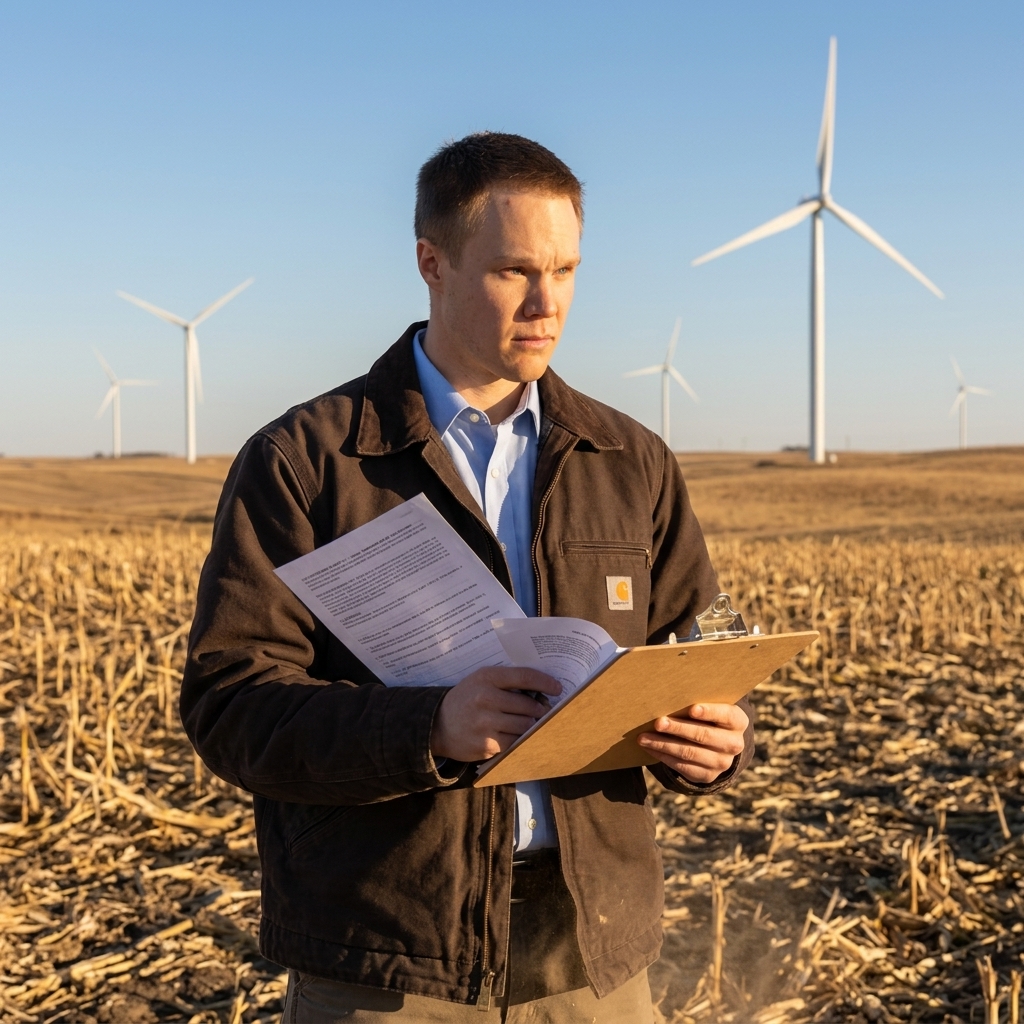
Every wind turbine has a lifespan — typically 20-25 years. When that lifespan ends, someone has to pay to remove it. A single turbine costs $200,000-$500,000 to decommission — including foundation removal, road restoration, and site remediation.
Most standard leases have inadequate decommissioning provisions. The developer promises to remove the turbines but provides no financial guarantee. If the developer goes bankrupt — which happens regularly in the energy industry — the landowner is left with a 300-foot steel monolith on their property and no money to remove it.
We negotiate decommissioning bonds, letters of credit, or escrow accounts that guarantee removal funds exist regardless of the developer’s financial health. This is one of the most important — and most commonly overlooked — lease provisions.
We don’t do hourly billing, and we don’t hand you a stack of paper and wish you luck. Our process is designed to be transparent, thorough, and completely finished when we’re done.
We review the developer’s proposed lease line by line, identifying every provision that favors the developer and every protection that’s missing for the landowner.
We negotiate directly with the developer’s attorneys to improve royalty rates, strengthen decommissioning requirements, reduce land-use restrictions, and add proper indemnification.
Once terms are agreed, we finalize the lease, record it properly, and advise on monitoring the developer’s compliance with lease terms throughout the project lifecycle.
Protection for landowners in renewable energy deals.
Line-by-line review of developer-drafted leases. We identify problematic clauses and negotiate terms that protect the landowner.
When multiple neighbors are approached by the same developer, we represent the group to negotiate collectively stronger terms.
Solar developments bring unique issues: panel density, drainage impacts, land restoration requirements, and agricultural compatibility.
Don’t sign until an ag attorney has reviewed it. Schedule a free consultation — we’ll tell you what’s fair and what’s not.
Legal services tailored to agriculture
Tell us what's going on. We'll point you in the right direction.
Free Consultation