Some farm operations need the structure of a corporation or cooperative — especially multi-generational operations with complex ownership, non-farming investors, or shared processing facilities.
LLCs are the right choice for most family agricultural business operations. But there are situations where a corporation or cooperative makes more sense.
S-Corporations offer pass-through taxation like an LLC but with a key payroll tax advantage: the profit distributions paid to shareholder-employees are not subject to self-employment tax, which can save thousands annually.
C-Corporations may be appropriate when retaining earnings at lower corporate rates or when stock issuance to outside investors is planned.
Cooperatives are member-owned organizations common in feed mills, grain elevators, equipment sharing, and marketing cooperatives.
Both Nebraska and Minnesota have strict anti-corporate farming laws that restrict which types of corporations can own agricultural land.
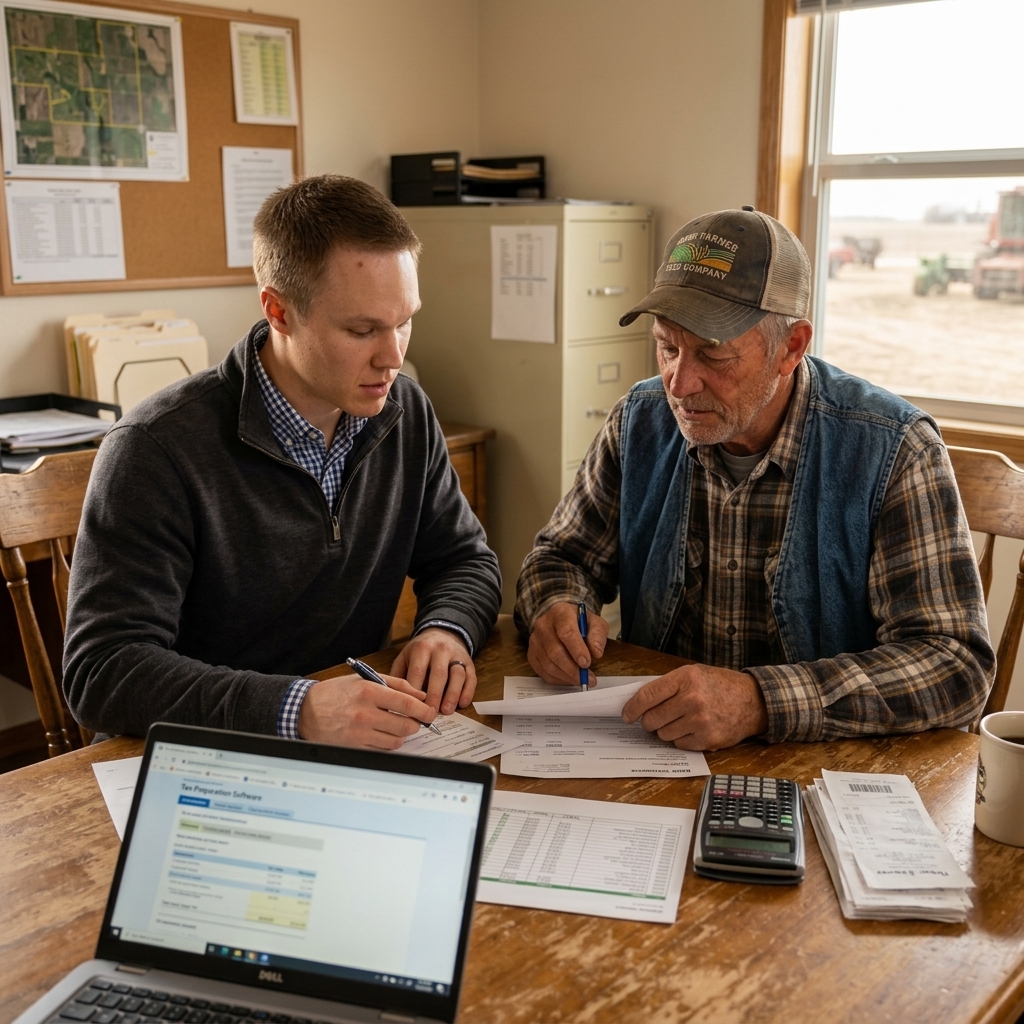
One of the most powerful — and most misunderstood — tax strategies for profitable farm operations is the S-Corporation election. Here’s how it works in plain terms.
In an LLC or sole proprietorship, all net farm income is subject to self-employment tax (currently 15.3%). If your operation nets $300,000, you’re paying $45,900 in self-employment tax alone.
With an S-Corp, you pay yourself a “reasonable salary” — say $80,000 — and take the remaining $220,000 as a distribution. Only the $80,000 salary is subject to payroll taxes. The $220,000 distribution is not. That’s a potential savings of over $30,000 per year.
The catch: the IRS scrutinizes “reasonable salary” closely, and not every operation is a good fit. We evaluate your specific situation to determine if the savings justify the additional administrative costs of an S-Corp.
We don’t do hourly billing, and we don’t hand you a stack of paper and wish you luck. Our process is designed to be transparent, thorough, and completely finished when we’re done.
We work with your CPA to analyze whether an LLC, S-Corp, C-Corp, or cooperative produces the best tax outcome for your specific operation.
We file articles of incorporation, draft bylaws or cooperative agreements, issue stock or membership certificates, and set up governance structures.
We ensure compliance with Nebraska and Minnesota corporate farming laws, set up annual reporting, and establish the record-keeping systems you need to maintain corporate status.
Structure that fits your operation’s scale and complexity.
Articles of incorporation, bylaws, shareholder agreements, stock issuance, and board governance documents.
Cooperative articles, bylaws, membership agreements, patronage allocation plans, and Subchapter T compliance.
Converting from LLC to S-Corp, sole proprietorship to corporation, or restructuring existing corporate entities.
We’ll evaluate whether an LLC, corporation, or cooperative is the right fit. Schedule a free consultation. Flat-fee pricing.
Legal services tailored to agriculture
Tell us what's going on. We'll point you in the right direction.
Free Consultation