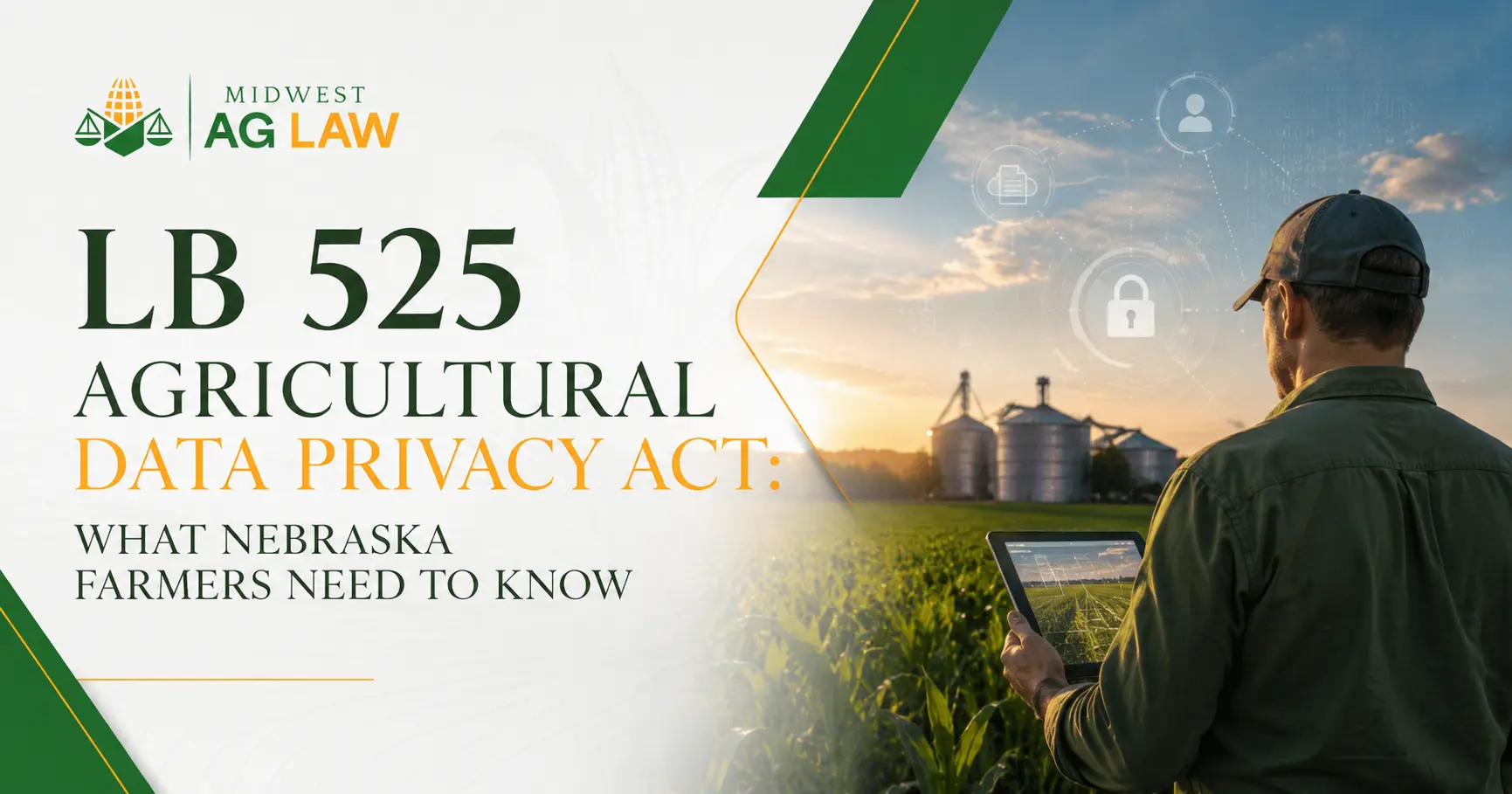
Nebraska’s proposed LB 525 Agricultural Data Privacy Act addresses one of agriculture’s fastest-growing legal concerns: who owns farm-generated data. As precision agriculture, connected equipment, and digital platforms collect increasing amounts of operational information, farmers need clear rules regarding ownership, consent, access, and data sharing. While technology delivers measurable benefits, agricultural producers should understand how contracts and privacy laws affect their rights before sharing valuable farm data.
Introduction
Modern farms generate more digital information than ever before. Every GPS-guided tractor, soil sensor, drone flight, weather station, and yield monitor creates data that helps improve productivity. At the same time, that information has become valuable to technology providers, equipment manufacturers, agribusinesses, insurers, and researchers.
That raises an increasingly important legal question: Who actually owns agricultural data?
Nebraska lawmakers introduced LB 525 to address growing concerns surrounding agricultural data privacy and ownership. Although producers have long owned their land, crops, and equipment, digital information generated during farming operations has often been governed primarily by private contracts rather than specific legislation.
Understanding how LB 525 Nebraska could affect agricultural operations helps producers evaluate existing agreements, reduce legal risks, and make informed decisions when adopting new agricultural technologies.
Why Agricultural Data Has Become a Valuable Asset
Precision agriculture has transformed farming into a highly data-driven industry.
Today’s operations routinely collect information including:
- Yield maps
- Soil nutrient levels
- Planting rates
- Fertility applications
- Livestock performance
- Irrigation records
- Equipment diagnostics
- Weather observations
- Satellite imagery
This information improves decision-making, increases efficiency, and supports sustainable production practices.
However, agricultural data also has commercial value beyond the individual farm. Aggregated datasets may help develop new software, improve artificial intelligence models, influence commodity research, or support financial products.
As digital agriculture expands, questions surrounding Nebraska agricultural data ownership have become increasingly important for both producers and agribusinesses.
Why Nebraska Introduced LB 525
Historically, agricultural data ownership has largely depended on private contracts between producers and technology providers.
Many user agreements grant companies broad rights to collect, analyze, store, or share farm-generated information. These provisions are often accepted during software installation or equipment activation without extensive review.
LB 525 seeks to establish clearer expectations regarding:
- Ownership of agricultural data
- Producer consent before sharing information
- Data security responsibilities
- Transparency regarding data use
- Contractual disclosures
The proposal reflects broader discussions occurring across multiple agricultural states as lawmakers evaluate how traditional property rights intersect with rapidly evolving digital technologies.
Key Legal Concepts Producers Should Understand
Agricultural Data Ownership
One of the central concepts behind proposed legislation is defining ownership of farm-generated digital information.
Ownership may influence rights involving:
- Access to collected data
- Downloading information
- Transferring records to another provider
- Restricting commercial use
- Revoking sharing permissions
Without clear contractual language, producers may discover that technology providers retain significant rights regarding stored information.
Reviewing agreements before purchasing digital farming systems remains one of the most effective risk-management practices.
Consent Before Sharing Data
Many agricultural technology platforms rely on cloud-based systems.
Data may be shared with:
- Software developers
- Equipment manufacturers
- Research organizations
- Business partners
- Third-party analytics providers
Proposed privacy protections generally emphasize informed consent before certain types of information are disclosed.
Understanding how consent is obtained and whether it can later be withdrawn can help producers maintain greater control over sensitive operational information.
Data Portability
Modern farms often use multiple software platforms.
If producers change technology providers, they may need access to years of historical records.
Important questions include:
- Can data be exported?
- Is it available in a usable format?
- Are additional fees required?
- Will historical records remain accessible?
Data portability has become an important issue because long-term production records often influence future management decisions.
Contract Terms May Matter More Than Many Farmers Realize
Even if legislation establishes general legal protections, contracts continue to play a critical role.
Agricultural technology agreements frequently address:
Licensing Rights
Some contracts distinguish between ownership of data and licensing rights to use it.
A producer may technically own information while granting extensive permission for commercial analysis or redistribution.
Data Retention
Companies may specify how long records remain stored after an account closes.
Farmers should understand:
- Retention periods
- Deletion procedures
- Backup policies
- Recovery options
Security Responsibilities
Cybersecurity risks continue to affect every industry, including agriculture.
Sensitive information may include:
- Financial records
- Production practices
- Livestock inventories
- Field locations
- Equipment usage
Strong contractual security obligations help reduce exposure following unauthorized access or data breaches.
Practical Steps Nebraska Farmers Can Take
Regardless of future legislative developments, producers can strengthen their data management practices today.
Read Technology Agreements Carefully
User agreements often contain important provisions involving:
- Data ownership
- Intellectual property
- Privacy
- Arbitration
- Liability limitations
Even standard software contracts deserve careful review before acceptance.
Ask Questions Before Purchasing Equipment
When evaluating new technology, producers should ask vendors:
- Who owns the generated data?
- Can information be exported?
- Is consent required before sharing?
- How is data protected?
- What happens if service ends?
Clear answers reduce misunderstandings later.
Maintain Local Copies
Keeping independent backups of production records provides additional protection if online accounts become unavailable.
Historical agricultural information may be valuable for:
- Crop insurance
- Tax documentation
- Regulatory compliance
- Farm succession planning
- Operational analysis
Review Existing Agreements Periodically
Technology evolves rapidly.
Contracts signed several years ago may no longer reflect current business practices or legal expectations.
Regular contract reviews help identify changing obligations.
The Bigger Picture: Digital Agriculture and Legal Responsibility
Agriculture increasingly depends on interconnected technologies.
Artificial intelligence, automated machinery, remote sensing, and cloud computing continue transforming farm management.
As innovation accelerates, legal frameworks will likely continue evolving to address questions involving:
- Privacy
- Ownership
- Cybersecurity
- Data portability
- Commercial licensing
Nebraska’s legislative discussions reflect a broader national conversation about balancing technological innovation with producer rights.
For producers, the most valuable approach is understanding both the technology and the legal agreements governing its use.
While legislation such as LB 525 Nebraska may provide additional clarity over time, informed contract review and thoughtful data management remain essential parts of modern agricultural operations.
Industry observers including legal professionals following agricultural law developments, such as those at Mid west Law continue monitoring how agricultural data privacy legislation may shape future producer rights and contractual practices.
Looking Ahead
Farm data has become nearly as valuable as the equipment collecting it. As precision agriculture expands, questions surrounding ownership, privacy, and responsible use will only become more significant.
Whether or not future legislation changes the legal landscape, farmers who understand their contracts, protect their digital records, and ask informed questions before adopting new technologies will be better positioned to safeguard one of their operation’s most valuable assets its information.
Frequently Asked Questions
1. What is LB 525 Nebraska?
LB 525 is proposed Nebraska legislation addressing agricultural data privacy, ownership, and the handling of farm-generated digital information.
2. Who owns agricultural data?
Ownership depends on applicable law and the specific terms of contracts between producers and technology providers.
3. Why is farm data valuable?
It supports precision agriculture, research, operational planning, equipment optimization, and business decision-making.
4. Should farmers review technology contracts?
Yes. Contracts often determine important rights related to data ownership, access, sharing, and security.
5. What is Nebraska agricultural data ownership?
It refers to the legal rights governing who controls, accesses, uses, and transfers digital information generated through farming operations.